

Choroid Plexus Volume Predicts MS Lesion Evolution and Brain Atrophy
Using our advanced imaging techniques, we investigated how the size of the choroid plexus – a key structure regulating immune cell entry into the brain – relates to the progression of multiple sclerosis. Our findings reveal an important early indicator of disease evolution.
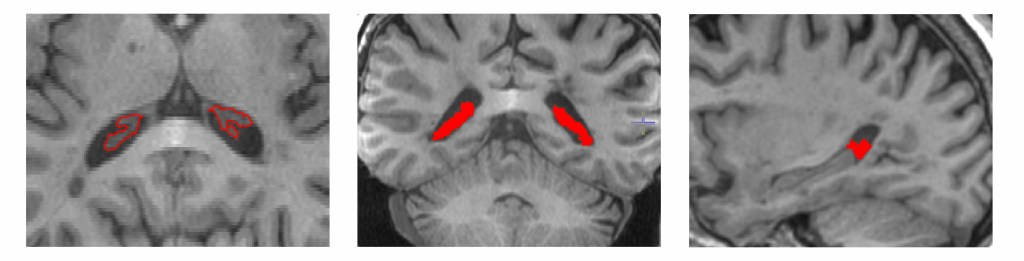
Key Findings:
- Predictive Power: Enlarged choroid plexus volume strongly predicts future expansion of chronic MS lesions, particularly those near the brain’s ventricles, with 85% sensitivity and 76% specificity
- Tissue Impact: Patients with enlarged choroid plexus showed accelerated tissue damage both within lesions and in surrounding brain regions, leading to faster brain atrophy
- Early Marker: The choroid plexus appears enlarged early in the disease course and remains stable over time, suggesting it may be an early disease indicator rather than just a response to damage
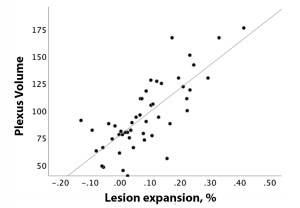
Clinical Implications:
- The choroid plexus size could serve as a biomarker to identify patients at higher risk of aggressive disease progression
- Patients with enlarged choroid plexus (above a specific threshold) have an 8-fold increased risk of lesion expansion
- This metric could help stratify patients for clinical trials and guide treatment decisions, particularly for therapies targeting chronic inflammation
Why It Matters:
This research establishes the choroid plexus as a critical early player in MS progression rather than just a bystander. The strong predictive relationship between choroid plexus size and future tissue damage suggests this structure may actively drive chronic inflammation in MS. Understanding this connection opens new avenues for therapeutic intervention and disease monitoring, potentially enabling earlier identification of patients who may benefit from more aggressive treatment approaches.
 MS Lesion Analytics