
Understanding the Choroid Plexus
The choroid plexus represents a fascinating and complex structure within the brain’s ventricles that has emerged as a key focus in multiple sclerosis research. This specialized tissue serves as a critical interface between blood and cerebrospinal fluid, functioning as both a sophisticated filtration system and an immune gateway. Beyond its role in producing the protective fluid that surrounds the brain, the choroid plexus orchestrates crucial processes that maintain brain health. It carefully regulates the entry of immune cells into the central nervous system, coordinates immune surveillance, and actively participates in removing metabolic waste products from the brain. This multifaceted role makes it particularly relevant for understanding neurological conditions like MS.
Why Is the Choroid Plexus Important in MS?
Recent advances in MS research have revealed that the choroid plexus plays a more dynamic role in disease progression than previously recognized. Our studies have demonstrated that this structure exhibits significant inflammation and enlargement in people with MS, particularly during the relapsing-remitting phase. Through advanced imaging techniques and comprehensive analysis, we’ve shown that changes in the choroid plexus correlate with various aspects of MS activity, including the formation and expansion of brain lesions. The choroid plexus appears to be chronically activated in MS, potentially serving as an alternative route for immune cell entry into the brain, especially in progressive forms of the disease where the blood-brain barrier remains relatively intact. These findings have significant implications for understanding disease mechanisms and developing new therapeutic strategies, as the choroid plexus may represent both a valuable indicator of disease activity and a promising target for treatment.
Our Research Contributions
These discoveries represent significant advances in our understanding of MS progression and reveal new possibilities for disease monitoring and treatment development. By identifying the choroid plexus as an active participant in MS pathology, we’ve opened promising new avenues for research and therapeutic intervention. Our team has conducted three pioneering studies examining different aspects of choroid plexus involvement in MS:

We established a significant link between choroid plexus volume and the expansion of chronic MS lesions. This discovery reveals how inflammation in the choroid plexus may contribute to the gradual growth of existing brain lesions, particularly those in proximity to the brain’s ventricles.
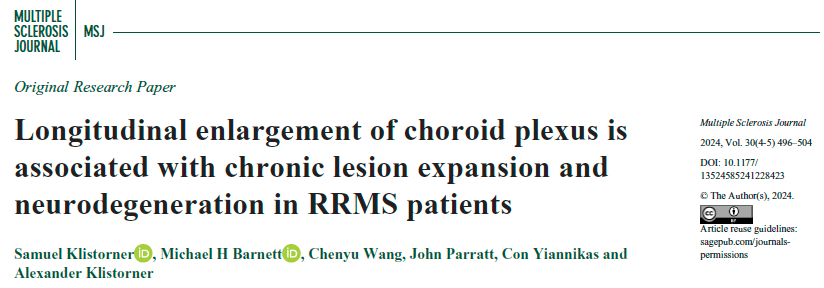
Through comprehensive longitudinal monitoring of people with relapsing-remitting MS, we mapped the temporal changes in choroid plexus volume and its relationship with both inflammatory activity and brain tissue loss. This research provides valuable insights into how the choroid plexus influences different aspects of MS progression.
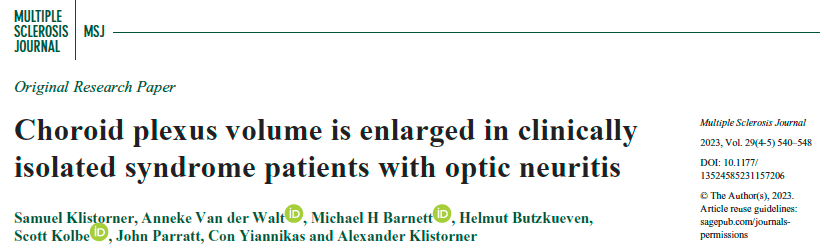
In early MS presentations (clinically isolated syndrome), we investigated the relationship between choroid plexus changes and early signs of inflammation and nerve damage in the visual system. This study offers crucial understanding of how choroid plexus inflammation may influence MS from its earliest stages.
 MS Lesion Analytics