
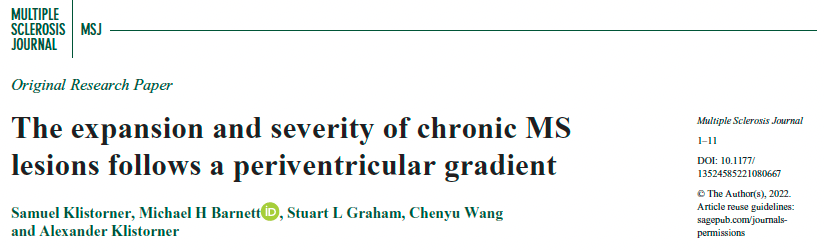
Using our in-house LEAP methodology, we analyzed how the proximity of chronic lesions to cerebrospinal fluid (CSF) spaces affects their expansion and severity in patients with relapsing-remitting multiple sclerosis (RRMS).

Key Findings:
- Periventricular Gradient: Lesions closer to the ventricles exhibit faster expansion and more severe tissue damage compared to those further away.
- Progressive Axonal Damage: Periventricular lesions showed higher rates of axonal loss and microstructural damage, driven by slow-burning inflammation at the lesion rim.
- CSF-Related Dependency: The proximity to CSF appears to amplify cytotoxic factors that promote lesion expansion and tissue injury.

Clinical Implications:
- These findings highlight the importance of monitoring periventricular lesion dynamics as a marker for MS progression.
- The CSF-related gradient offers potential insights into the underlying mechanisms of chronic inflammation in MS and may inform targeted therapeutic strategies.
Why It Matters:
Understanding the spatial and biological factors driving lesion expansion enables better tracking of disease activity and could guide more personalised treatment approaches for MS patients.
 MS Lesion Analytics