

Gender-Specific Progression of Tissue Damage in Multiple Sclerosis Lesions
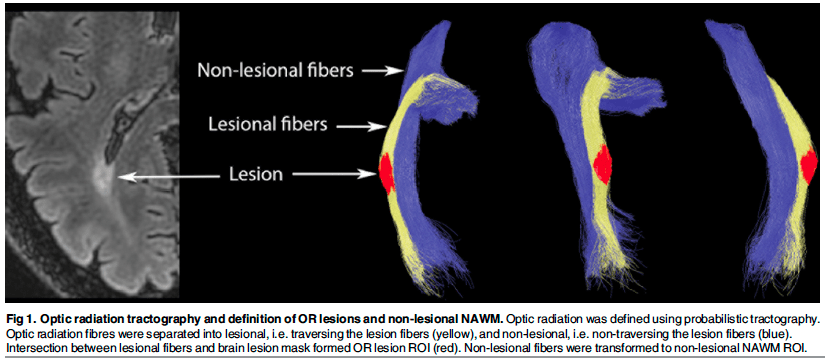
Using our in-house DTI analysis techniques, we investigated how chronic MS lesions evolve differently in male and female patients, uncovering important insights into gender-specific disease progression patterns.
Key Findings:
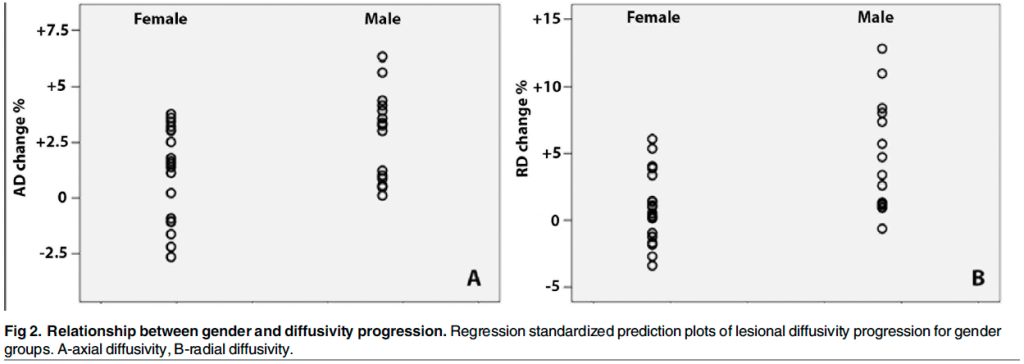
- Gender-Specific Evolution: Male patients showed significantly faster progression of tissue damage in chronic lesions, with up to 6.5 times higher rates of change in certain markers compared to females
- Comprehensive Changes: We observed increases in both axial and radial diffusivity within lesions, indicating ongoing inflammation and tissue destruction that particularly affected male patients
- Distinct Patterns: While lesion size was larger in males, statistical analysis confirmed that gender itself, rather than lesion volume, drove the differences in progression
Clinical Implications:
- These findings help explain the observed trend of faster clinical progression in male MS patients
- The results establish DTI as a promising biomarker for monitoring gender-specific disease evolution
- The data suggests potential need for gender-specific treatment approaches
Why It Matters:
Understanding gender-based differences in MS progression provides crucial insights for developing more personalized treatment strategies. This research offers the first clear biological evidence explaining why male patients often experience faster disease progression, potentially leading to more targeted therapeutic interventions based on gender-specific disease patterns.
 MS Lesion Analytics