

We developed an innovative method to analyze how multiple sclerosis lesions evolve over time, allowing us to separately measure and track nerve fiber loss and myelin damage using advanced brain imaging techniques. This new approach provides crucial insights into how MS causes progressive disability.
Key Findings:
- Our analysis revealed that nerve fiber loss and myelin damage contribute independently to MS lesion development, with different patterns of change over time
- Nerve fiber loss shows a direct relationship with lesion severity – as lesions worsen, more nerve fibers are lost in a predictable way
- Myelin damage has the greatest impact in early lesions when many nerve fibers are still intact, but becomes less prominent as nerve fiber loss increases
- The rim area around lesions shows distinct patterns from the lesion core, making it potentially useful for monitoring treatment effects
Novel Technical Advances:
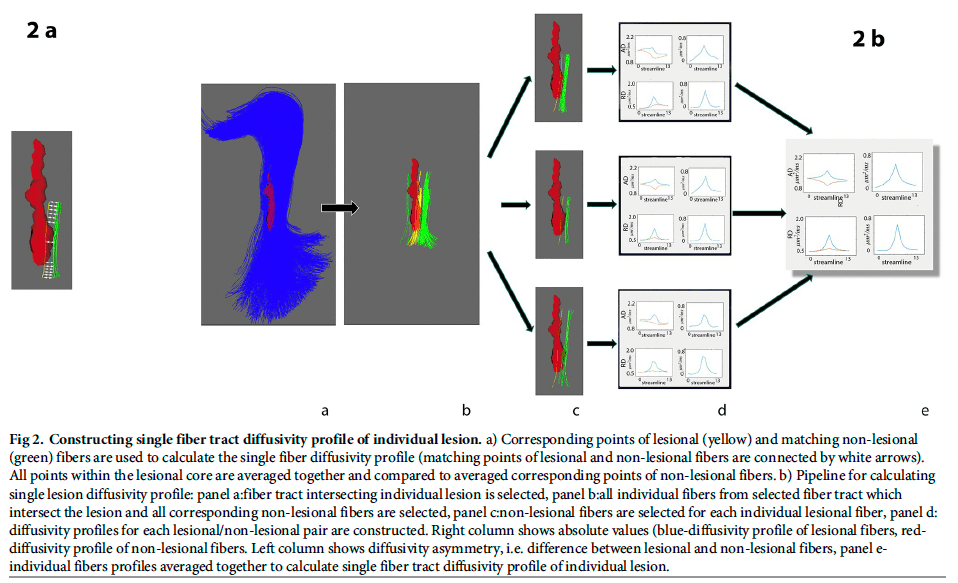
- Created a new single-fiber tracking method that can analyze MS lesions throughout the brain, not just in specific nerve pathways
- Developed algorithms to separate and quantify nerve fiber loss from myelin damage within the same lesion
- Established techniques to control for complex brain anatomy when measuring lesion changes
- Implemented automated analysis approaches that enable consistent measurement across many patients
Clinical Implications:
- Provides a way to identify which lesions may respond best to remyelination therapies
- Enables better monitoring of treatment effects by separately tracking nerve fiber and myelin changes
- Suggests the lesion rim may be the optimal target for treatments aimed at protecting nerve fibers
- Demonstrates why current MS treatments may have limited effects on progressive disability
Why It Matters:
This work fundamentally changes our understanding of how MS lesions evolve and cause disability. By showing that nerve fiber loss and myelin damage follow distinct patterns, we can better understand why some treatments work better than others and identify new therapeutic strategies. The ability to separately measure these two processes provides critical tools for developing and testing new treatments, particularly those aimed at protecting nerve fibers or promoting myelin repair. This advance may help explain why some patients progress faster than others and guide more personalized treatment approaches in MS.
 MS Lesion Analytics