
Our study compared how two different mechanisms – slow-burning inflammation at lesion edges and chronic demyelination – contribute to tissue damage in multiple sclerosis lesions.
Key Findings:
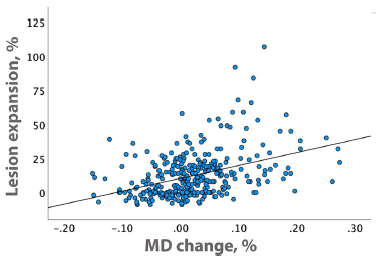
- Expanding vs Stable Lesions: Of 361 lesions analyzed, 104 showed expansion while 257 remained stable, demonstrating distinct patterns of tissue damage
- Inflammation Impact: Expanding lesions showed 5 times higher tissue damage rate compared to stable lesions, indicating slow-burning inflammation’s significant role
- Demyelination Effects: Analysis of chronically demyelinated optic nerves revealed modest tissue damage similar to stable brain lesions, suggesting limited impact of demyelination alone

Novel Technical Advances:
- Developed method to normalize measurements of tissue damage across lesions
- Created approach to exclude effects of new lesions on chronic lesion analysis
- Used visual system to validate findings in a different part of the nervous system
Clinical Implications:
- Slow-burning inflammation appears more destructive than chronic demyelination
- Treatments targeting inflammation at lesion edges may be more effective than those focusing on demyelination
- Findings suggest need for early intervention to prevent lesion expansion
Why It Matters:
Understanding the relative impact of these two mechanisms helps guide treatment strategies for MS. Our findings suggest that controlling slow-burning inflammation at lesion edges should be a primary therapeutic target, potentially leading to more effective treatments that could slow disease progression.
 MS Lesion Analytics