
Brain Atrophy in Multiple Sclerosis: Multiple Factors Drive Progressive Brain Loss
This study reveals how different disease processes contribute to brain volume loss in multiple sclerosis (MS), providing new insights into why current treatments may not fully prevent disease progression.

Key Findings:
- Brain volume loss in MS results from multiple factors, with new lesions accounting for 40% of brain atrophy variability
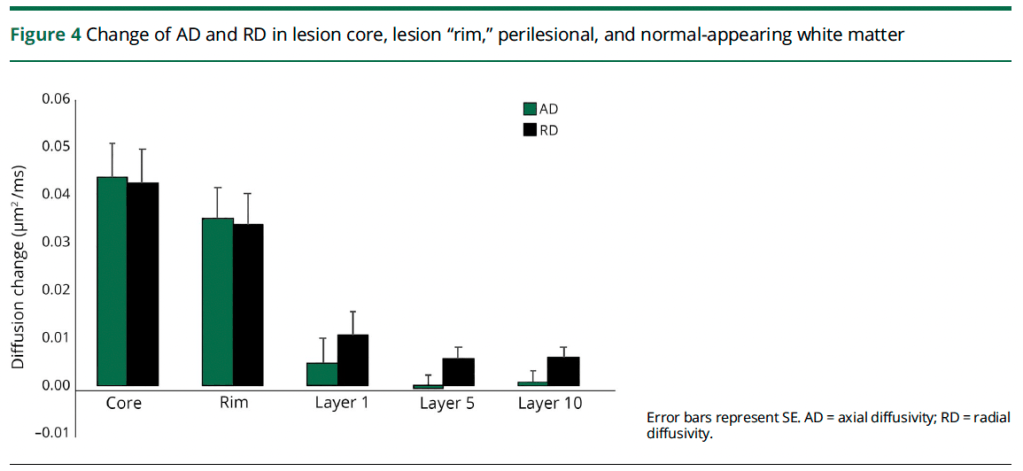
- Progressive tissue damage within chronic lesions significantly contributes to brain shrinkage, explaining 38% of brain volume changes
- Diffuse damage to normal-appearing white matter adds another important factor driving brain tissue loss
- The combination of these factors explains over 60% of brain volume changes in MS patients
Novel Technical Insights:
- Used advanced imaging to track tissue changes over 5 years in MS patients
- Demonstrated that chronic lesions continue to cause damage long after their initial formation
- Showed that damage to normal-appearing brain tissue occurs independently from lesion activity
- Developed methods to measure different types of tissue injury simultaneously
Clinical Implications:
- Explains why current MS treatments, which mainly prevent new lesions, may not fully stop disease progression
- Suggests need for combination therapies targeting multiple aspects of the disease
- Provides new ways to monitor treatment effectiveness
- Highlights importance of early intervention to prevent cumulative tissue damage
Why It Matters:
Understanding these multiple contributors to brain atrophy helps explain why MS progresses differently in different patients and points toward new therapeutic strategies. The findings suggest that effective MS treatment may require addressing both inflammatory activity and chronic tissue degeneration.
 MS Lesion Analytics