Category: Choroid Plexus

This section looks at the role of the Choroid Plexus and its association with lesion expansion and disease progression

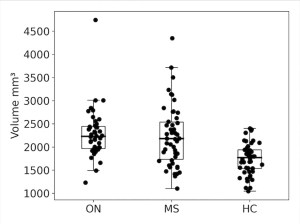
  • Choroid plexus volume is enlarged in clinically isolated syndrome patients with optic neuritis

    Choroid plexus volume is enlarged in clinically isolated syndrome patients with optic neuritis

    Early Changes in Choroid Plexus Volume: A Novel Window into Multiple Sclerosis Development

    Using our advanced imaging and analysis techniques, we investigated how the choroid plexus – a key gateway between the immune system and brain – changes during the earliest stages of multiple sclerosis, providing new insights into disease onset and progression.

    Key Findings:

    • Early Enlargement: The choroid plexus is already enlarged in patients presenting with their first MS-type symptoms (clinically isolated syndrome), even before other brain changes are visible
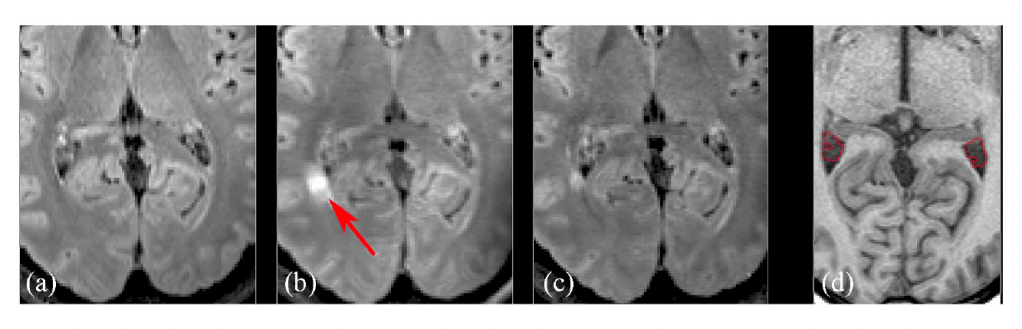
    • Dynamic Response: The choroid plexus shows a transient 6-7% increase in volume when new MS lesions form, returning to baseline within months
    • Independent Factor: Enlargement appears unrelated to the severity of inflammation or tissue damage, suggesting it may be an early disease marker rather than just a response to damage
    Clinical Implications:

    • The early presence of choroid plexus changes, before widespread brain involvement, suggests it may play a key role in disease initiation
    • This finding could lead to earlier disease detection and potentially new therapeutic targets focused on the choroid plexus
    • The transient volume changes during lesion formation provide a new window into monitoring disease activity
    Why It Matters:

    Understanding these early changes in the choroid plexus reshapes our view of how MS begins and progresses. Rather than being just a consequence of brain inflammation, choroid plexus enlargement may be one of the earliest detectable signs of disease, potentially opening new avenues for early intervention and treatment. This research advances our understanding of the critical role the choroid plexus plays in MS and may help identify patients at risk before significant brain damage occurs.

  • Choroid plexus volume in multiple sclerosis predicts expansion of chronic lesions and brain atrophy

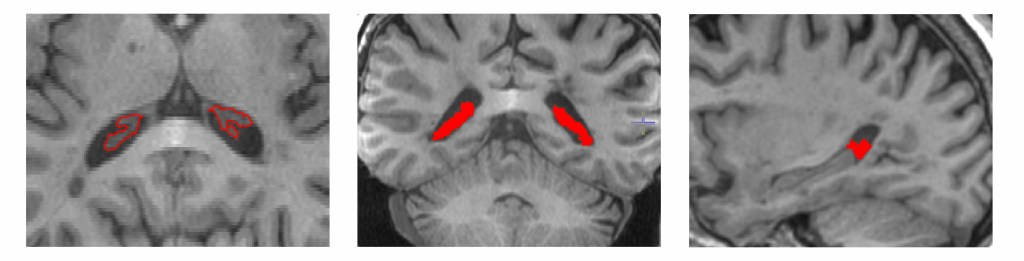
    Choroid plexus volume in multiple sclerosis predicts expansion of chronic lesions and brain atrophy

    Choroid Plexus Volume Predicts MS Lesion Evolution and Brain Atrophy

    Using our advanced imaging techniques, we investigated how the size of the choroid plexus – a key structure regulating immune cell entry into the brain – relates to the progression of multiple sclerosis. Our findings reveal an important early indicator of disease evolution.

    Key Findings:

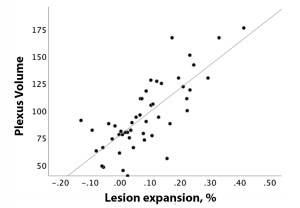
    • Predictive Power: Enlarged choroid plexus volume strongly predicts future expansion of chronic MS lesions, particularly those near the brain’s ventricles, with 85% sensitivity and 76% specificity
    • Tissue Impact: Patients with enlarged choroid plexus showed accelerated tissue damage both within lesions and in surrounding brain regions, leading to faster brain atrophy
    • Early Marker: The choroid plexus appears enlarged early in the disease course and remains stable over time, suggesting it may be an early disease indicator rather than just a response to damage

    Clinical Implications:

    • The choroid plexus size could serve as a biomarker to identify patients at higher risk of aggressive disease progression
    • Patients with enlarged choroid plexus (above a specific threshold) have an 8-fold increased risk of lesion expansion
    • This metric could help stratify patients for clinical trials and guide treatment decisions, particularly for therapies targeting chronic inflammation

    Why It Matters:

    This research establishes the choroid plexus as a critical early player in MS progression rather than just a bystander. The strong predictive relationship between choroid plexus size and future tissue damage suggests this structure may actively drive chronic inflammation in MS. Understanding this connection opens new avenues for therapeutic intervention and disease monitoring, potentially enabling earlier identification of patients who may benefit from more aggressive treatment approaches.

  • Longitudinal enlargement of choroid plexus is associated with chronic lesion expansion and neurodegeneration in RRMS patients

    Longitudinal enlargement of choroid plexus is associated with chronic lesion expansion and neurodegeneration in RRMS patients

    Progressive Choroid Plexus Enlargement: A Window into Multiple Sclerosis Evolution

    Using advanced longitudinal imaging, we investigated how the choroid plexus – a critical gateway between the immune system and brain – changes over time in MS patients, revealing new insights into disease progression and brain tissue damage.

    Key Findings:

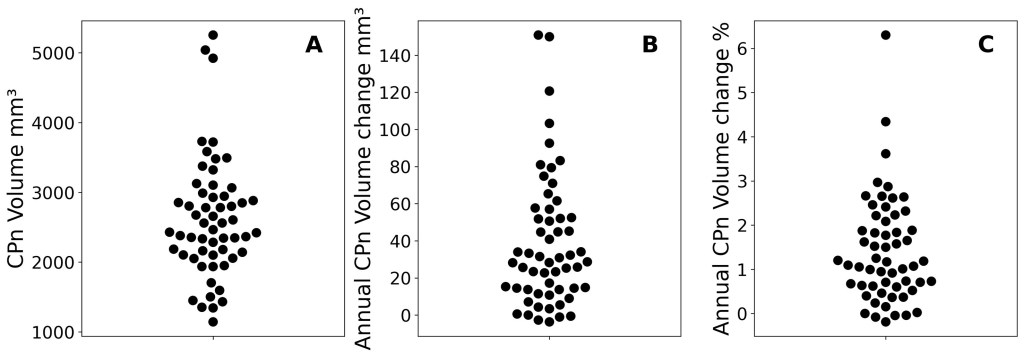
    • Consistent Growth: The choroid plexus shows progressive enlargement of about 1.4% annually in MS patients, though individual rates vary considerably (from -0.2% to 6.3%)
    • Tissue Damage Link: Enlargement strongly correlates with both expansion of chronic MS lesions and accelerated brain tissue loss, particularly in areas near the brain’s ventricles
    • Selective Impact: While the changes affect both white and gray matter, deep brain structures show stronger effects than cortical regions, suggesting a distinct pattern of tissue damage

    Clinical Implications:

    • The progressive enlargement of the choroid plexus may serve as a measurable indicator of ongoing inflammatory processes in MS
    • The strong correlation with brain tissue loss, particularly in periventricular regions, suggests choroid plexus changes could help predict disease progression
    • The differing impact on deep versus cortical brain regions provides new insights into how MS affects different brain compartments

    Why It Matters:

    This longitudinal study reveals for the first time how choroid plexus enlargement tracks with key measures of MS progression. Rather than being a static change, the continuous growth of this structure appears tightly linked to ongoing inflammatory processes and tissue damage. This insight opens new possibilities for monitoring disease activity and potentially identifying patients at higher risk of progression, while also suggesting the choroid plexus itself might be a meaningful therapeutic target in MS treatment.