Category: Expansion and Disease Progression

  • Evidence of progressive tissue loss in the core of chronic MS lesions: A longitudinal DTI study

    Evidence of progressive tissue loss in the core of chronic MS lesions: A longitudinal DTI study

    Progressive Tissue Loss in Chronic MS Lesions: Mechanisms of Brain Volume Loss

    This longitudinal study reveals how ongoing tissue damage within chronic MS lesions contributes to brain atrophy, offering new insights into disease progression even in treated patients.
    Key Findings:

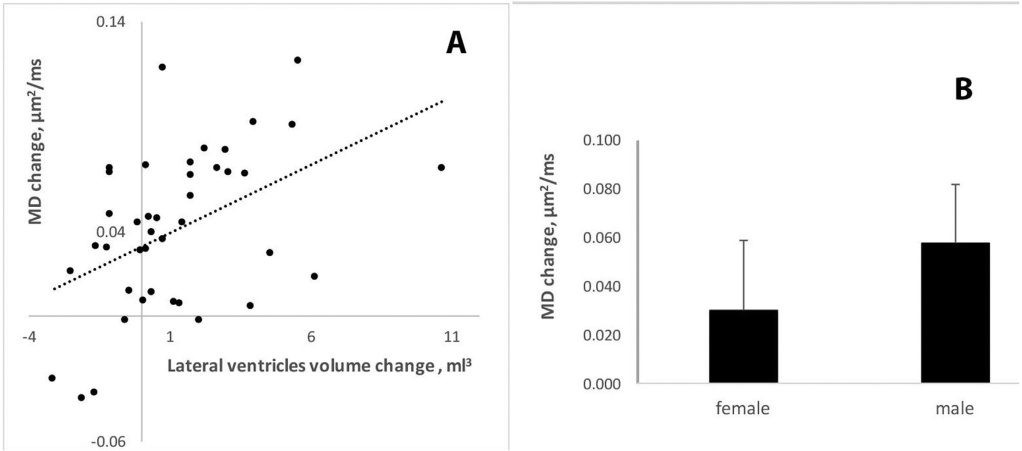
    • Significant tissue loss occurs within chronic inactive MS lesions, with water diffusion increasing by 3.3% annually in lesion cores
    • Brain volume decreased by approximately 2% over the 5-year study period, showing continued atrophy despite treatment
    • Males showed nearly twice the rate of tissue damage compared to females, suggesting important gender differences in disease progression
    • Tissue damage within chronic lesions strongly correlated with overall brain atrophy, explaining 38% of brain volume changes
    Novel Technical Advances:

    • Used advanced diffusion tensor imaging to track microstructural changes over time
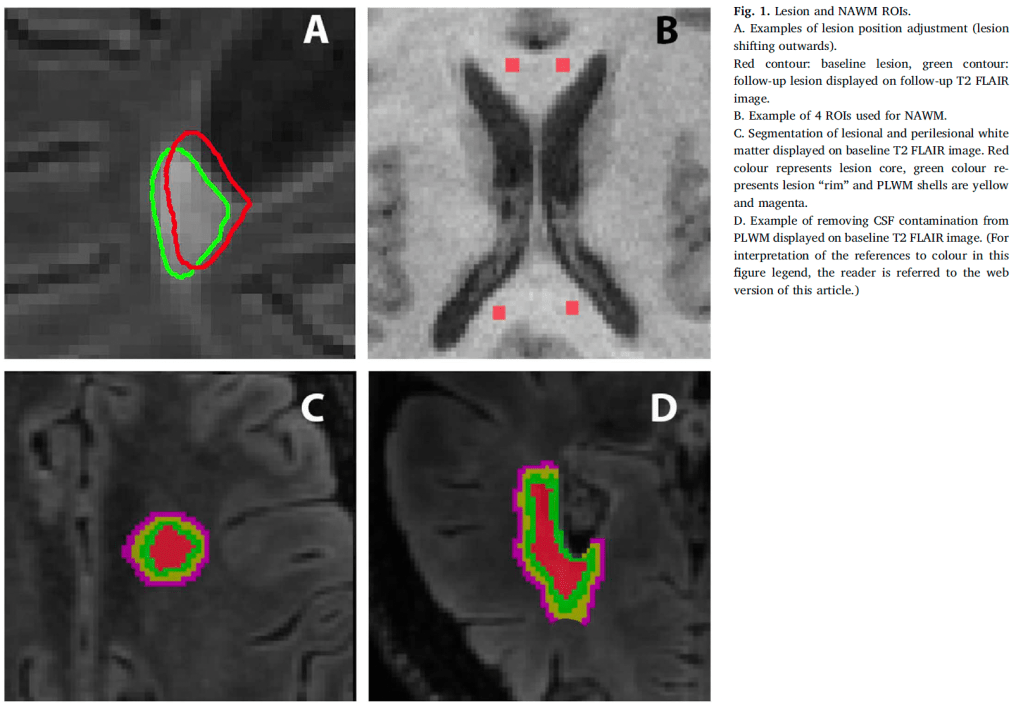
    • Developed methods to precisely analyze lesion cores separate from edges
    • Created techniques to account for brain atrophy when measuring lesion changes
    • Established ways to quantify progressive tissue damage in stable lesions

    Clinical Implications:

    • Explains why current MS treatments may not fully prevent disease progression
    • Suggests need for additional therapeutic approaches targeting chronic lesion damage
    • Highlights importance of considering gender differences in clinical trials
    • Demonstrates value of monitoring lesion changes to predict disease course

    Why It Matters:

    Understanding how chronic lesions continue to cause tissue damage even without new inflammation provides crucial insights into MS progression. The findings suggest that protecting demyelinated axons and promoting remyelination may be critical therapeutic goals, alongside current anti-inflammatory treatments.
  • Lesion activity and chronic demyelination are the major determinants of brain atrophy in MS

    Lesion activity and chronic demyelination are the major determinants of brain atrophy in MS

    Brain Atrophy in Multiple Sclerosis: Multiple Factors Drive Progressive Brain Loss

    This study reveals how different disease processes contribute to brain volume loss in multiple sclerosis (MS), providing new insights into why current treatments may not fully prevent disease progression.

    Key Findings:

    • Brain volume loss in MS results from multiple factors, with new lesions accounting for 40% of brain atrophy variability
    • Progressive tissue damage within chronic lesions significantly contributes to brain shrinkage, explaining 38% of brain volume changes
    • Diffuse damage to normal-appearing white matter adds another important factor driving brain tissue loss
    • The combination of these factors explains over 60% of brain volume changes in MS patients

    Novel Technical Insights:

    • Used advanced imaging to track tissue changes over 5 years in MS patients
    • Demonstrated that chronic lesions continue to cause damage long after their initial formation
    • Showed that damage to normal-appearing brain tissue occurs independently from lesion activity
    • Developed methods to measure different types of tissue injury simultaneously

    Clinical Implications:

    • Explains why current MS treatments, which mainly prevent new lesions, may not fully stop disease progression
    • Suggests need for combination therapies targeting multiple aspects of the disease
    • Provides new ways to monitor treatment effectiveness
    • Highlights importance of early intervention to prevent cumulative tissue damage

    Why It Matters:

    Understanding these multiple contributors to brain atrophy helps explain why MS progresses differently in different patients and points toward new therapeutic strategies. The findings suggest that effective MS treatment may require addressing both inflammatory activity and chronic tissue degeneration.

  • Expansion of chronic lesions is linked to disease progression in relapsing–remitting multiple sclerosis patients

    Expansion of chronic lesions is linked to disease progression in relapsing–remitting multiple sclerosis patients

    We investigated how chronic inflammatory lesions in multiple sclerosis evolve over time by studying their expansion patterns and relationship to disease progression in patients with relapsing-remitting MS over a 4-year period.

    Key Findings:

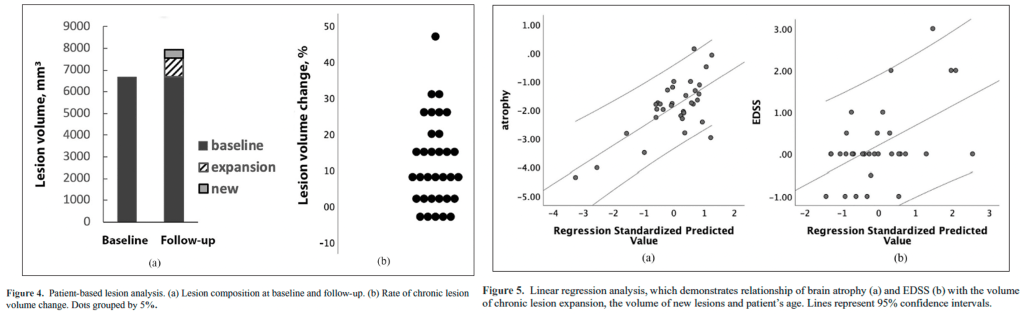
    • The expansion of chronic lesions, rather than formation of new lesions, accounts for most (67%) of total brain lesion volume increase in MS patients
    • Nearly half (46%) of chronic lesions showed significant expansion, while only 12% shrank over time
    • Lesion expansion strongly correlated with both brain atrophy and increased disability, suggesting it drives disease progression
    • Older patients showed higher rates of lesion expansion, potentially explaining accelerated disability in aging MS patients

    Novel Technical Advances:

    • Developed sophisticated imaging analysis methods to precisely track individual lesion changes over time
    • Created automated algorithms to distinguish between expanding chronic lesions and new lesion formation
    • Established quantitative measures to assess tissue damage within expanding lesions using diffusion imaging
    • Implemented rigorous controls for brain atrophy effects on lesion measurements

    Clinical Implications:

    • The dominant role of chronic lesion expansion in disease progression suggests new therapeutic targets are needed
    • Treatments focusing only on preventing new lesions may not adequately address ongoing tissue damage
    • Monitoring chronic lesion expansion could help identify patients at higher risk of progression
    • Age-related increases in lesion expansion indicate older patients may need different therapeutic approaches

    Why It Matters:

    This study fundamentally changes our understanding of how MS progresses by showing that the slow expansion of existing lesions, rather than formation of new ones, is the primary driver of accumulating disability. This challenges the traditional focus on preventing new lesion formation and suggests that therapies targeting chronic inflammation at lesion edges could help prevent disease progression. The findings explain why current treatments, while effective at reducing new lesions, may not fully prevent advancing disability, especially in older patients. This work provides crucial evidence for developing new therapeutic strategies aimed at the smoldering inflammation that causes lesion expansion.

  • Examining the Relative Contribution of Slow-Burning Inflammation and Chronic Demyelination to Axonal Damage in Chronic Multiple Sclerosis Lesions

    Examining the Relative Contribution of Slow-Burning Inflammation and Chronic Demyelination to Axonal Damage in Chronic Multiple Sclerosis Lesions

    Our study compared how two different mechanisms – slow-burning inflammation at lesion edges and chronic demyelination – contribute to tissue damage in multiple sclerosis lesions.

    Key Findings:

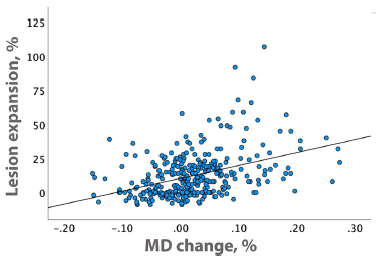
    • Expanding vs Stable Lesions: Of 361 lesions analyzed, 104 showed expansion while 257 remained stable, demonstrating distinct patterns of tissue damage
    • Inflammation Impact: Expanding lesions showed 5 times higher tissue damage rate compared to stable lesions, indicating slow-burning inflammation’s significant role
    • Demyelination Effects: Analysis of chronically demyelinated optic nerves revealed modest tissue damage similar to stable brain lesions, suggesting limited impact of demyelination alone

    Novel Technical Advances:

    • Developed method to normalize measurements of tissue damage across lesions
    • Created approach to exclude effects of new lesions on chronic lesion analysis
    • Used visual system to validate findings in a different part of the nervous system

    Clinical Implications:

    • Slow-burning inflammation appears more destructive than chronic demyelination
    • Treatments targeting inflammation at lesion edges may be more effective than those focusing on demyelination
    • Findings suggest need for early intervention to prevent lesion expansion

    Why It Matters:

    Understanding the relative impact of these two mechanisms helps guide treatment strategies for MS. Our findings suggest that controlling slow-burning inflammation at lesion edges should be a primary therapeutic target, potentially leading to more effective treatments that could slow disease progression.

  • Diffusivity in multiple sclerosis lesions: At the cutting edge?

    Diffusivity in multiple sclerosis lesions: At the cutting edge?

    Patterns of Tissue Damage in Multiple Sclerosis Lesions: Insights from Advanced Diffusion Imaging

    Using our in-house diffusion tensor imaging (DTI) analysis techniques, we investigated how tissue damage evolves differently in the core versus periphery of chronic MS lesions, uncovering distinct patterns that provide new insights into disease mechanisms.

    Key Findings:

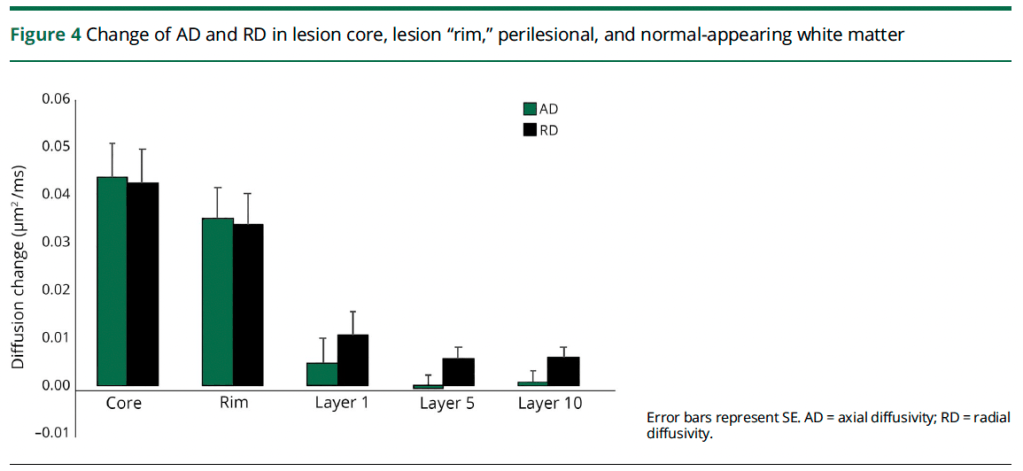
    • Distinct Damage Patterns: We identified a previously unrecognized pattern where lesion rims show predominantly myelin damage, while core regions exhibit more severe tissue destruction and axonal loss
    • Rim Characteristics: The peripheral regions of lesions maintain relatively constant width regardless of lesion size, suggesting a preserved zone that may be more amenable to therapeutic intervention
    • Core Dynamics: Central lesion areas demonstrate more severe tissue disruption with equal increases in both axial and radial diffusivity, indicating extensive structural breakdown

    Clinical Implications:

    • The preserved lesion rim may represent an optimal target for emerging remyelination therapies
    • Understanding these distinct patterns could help develop more sensitive measures for monitoring treatment effects
    • The findings suggest different therapeutic approaches may be needed for lesion cores versus rims

    Why It Matters:

    This research reveals for the first time how tissue damage evolves differently across MS lesions. By demonstrating that the lesion rim maintains structural integrity while showing primarily myelin loss, we’ve identified a potential therapeutic window where remyelination treatments might be most effective. This insight could fundamentally change how we approach treatment and monitoring of MS lesions.

  • Evolution of Chronic Lesion Tissue in RRMS patients: An association with disease progression

    Evolution of Chronic Lesion Tissue in RRMS patients: An association with disease progression

    This study delves into the long-term progression of Chronic Lesion Tissue (CLT) in relapsing-remitting multiple sclerosis (RRMS) patients, examining its effects on clinical and radiological indicators of disease progression.

    Key Findings:

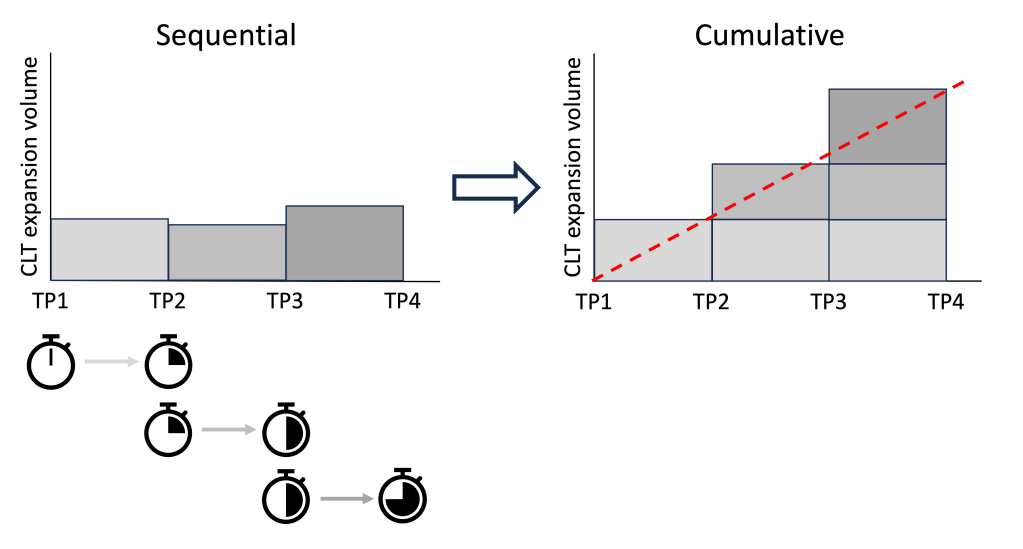
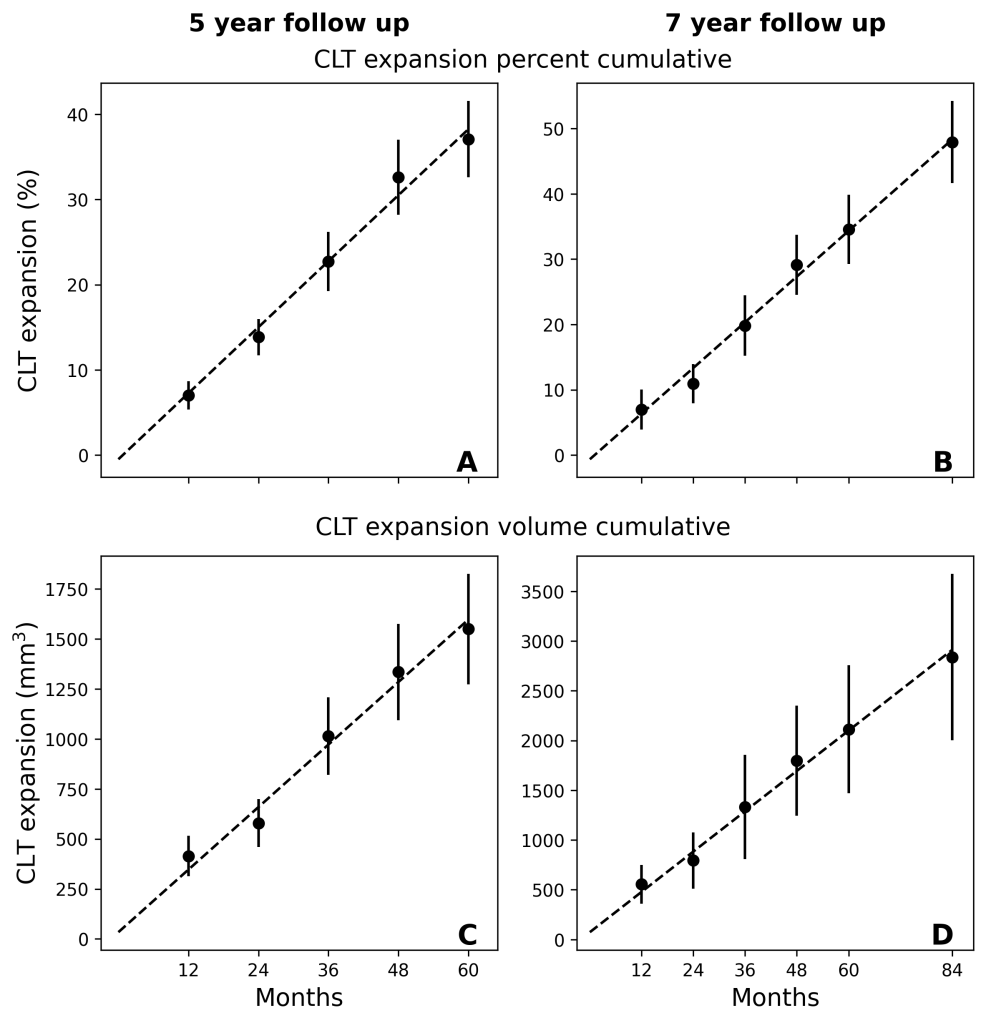
    • Consistent Growth: CLT increases at a steady annual rate of 7.75%, significantly impacting brain atrophy and disability.
    • Clinical Impact: Patients with higher CLT expansion exhibit faster central brain atrophy, particularly in deep grey matter, and worsening disability scores.

    Implications for Clinical Trials:

    • CLT expansion provides a promising biomarker for RRMS progression, offering a basis for designing smaller, targeted trials to evaluate therapies aimed at mitigating smouldering inflammation.
    • Calculations show that trials targeting CLT expansion require relatively small cohorts, making them feasible and efficient.

    Why It Matters:

    This research highlights the potential of monitoring CLT dynamics to better understand RRMS progression, tailor interventions, and refine clinical trial design.