Category: Spatial Distribution

  • The expansion and severity of chronic MS lesions follows a periventricular gradient

    The expansion and severity of chronic MS lesions follows a periventricular gradient

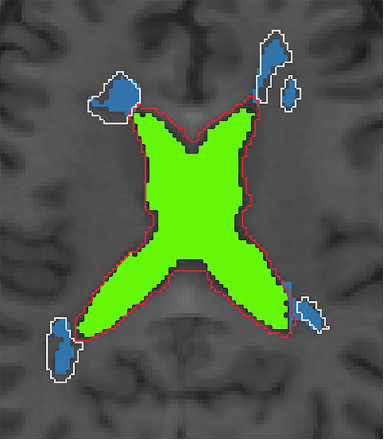
    Using our in-house LEAP methodology, we analyzed how the proximity of chronic lesions to cerebrospinal fluid (CSF) spaces affects their expansion and severity in patients with relapsing-remitting multiple sclerosis (RRMS).

    Key Findings:

    • Periventricular Gradient: Lesions closer to the ventricles exhibit faster expansion and more severe tissue damage compared to those further away.
    • Progressive Axonal Damage: Periventricular lesions showed higher rates of axonal loss and microstructural damage, driven by slow-burning inflammation at the lesion rim.
    • CSF-Related Dependency: The proximity to CSF appears to amplify cytotoxic factors that promote lesion expansion and tissue injury.

    Clinical Implications:

    • These findings highlight the importance of monitoring periventricular lesion dynamics as a marker for MS progression.
    • The CSF-related gradient offers potential insights into the underlying mechanisms of chronic inflammation in MS and may inform targeted therapeutic strategies.

    Why It Matters:

    Understanding the spatial and biological factors driving lesion expansion enables better tracking of disease activity and could guide more personalised treatment approaches for MS patients.
  • Mechanisms of Central Brain Atrophy in Multiple Sclerosis

    Mechanisms of Central Brain Atrophy in Multiple Sclerosis

    This study investigates how inflammation, including chronic and acute lesion activity, contributes to central brain atrophy (CBA) in patients with relapsing-remitting multiple sclerosis (RRMS).

    Key Findings:

    • Ventricular Enlargement: Over 4 years, patients experienced an average 12.6% increase in ventricular volume, driven largely by chronic lesion expansion.
    • Inflammatory Impact: Chronic lesion activity accounted for 69% of total lesion volume increase and emerged as the primary factor driving CBA.
    • Tissue Damage Severity: Incorporating measures of tissue damage significantly improved the understanding of how lesions contribute to atrophy, explaining 90% of CBA variability.

    Clinical Implications:

    • Chronic lesion expansion plays a pivotal role in neurodegeneration, underscoring its importance as a biomarker for MS progression.
    • Ventricular enlargement, a reliable and precise measure of CBA, offers a practical tool for monitoring MS progression and assessing treatment efficacy.

    Why It Matters:

    Understanding the mechanisms behind CBA enhances our ability to monitor MS progression, predict outcomes, and optimise therapeutic strategies.