
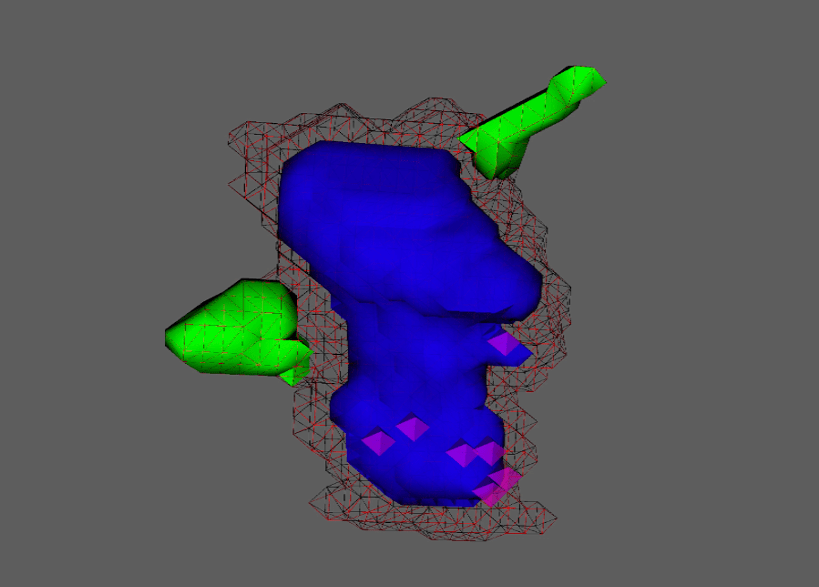
Our team at the University of Sydney has developed LEAP (Lesion Expansion and Analysis Pipeline), an innovative automated solution that transforms how we track and measure lesion evolution in multiple sclerosis. This breakthrough methodology provides unprecedented precision in monitoring disease progression and treatment effectiveness.
Breaking New Ground in Lesion Analysis
Traditional approaches to measuring MS lesion changes have been limited by technical constraints and manual processing requirements. LEAP overcomes these limitations through sophisticated automation and precise volumetric analysis, offering a comprehensive solution for tracking individual lesion evolution over time.
The LEAP Process
LEAP operates through a series of sophisticated algorithms that process carefully co-registered MRI scans.
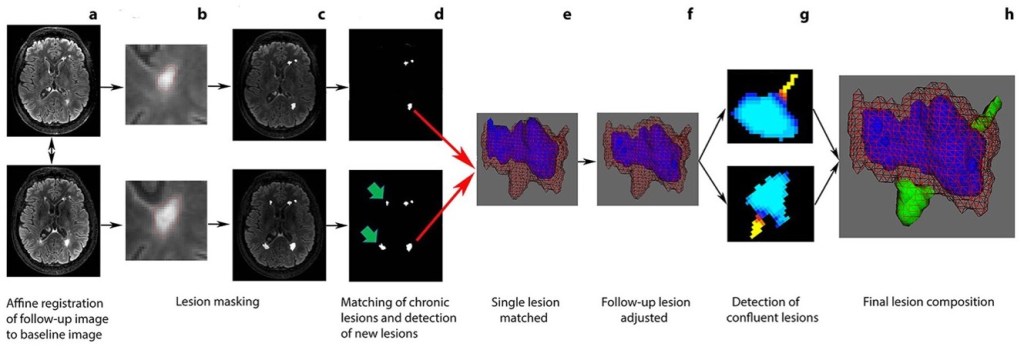
The pipeline begins with preprocessing steps that ensure accurate analysis:
First, FLAIR images are co-registered to a standardized space using linear registration, establishing a consistent framework for comparison. Lesions are then delineated either manually or through AI-based segmentation, creating binary masks that serve as input for the automated analysis.
The core algorithm performs several critical functions:
- Identifies and matches corresponding lesions between timepoints using spatial connectedness
- Automatically corrects for brain atrophy-related lesion displacement through rigid body co-registration
- Detects and separates new lesions, both free-standing and confluent, from chronic lesion expansion
A key innovation is LEAP’s handling of confluent lesions through our concentricity expansion algorithm. This sophisticated approach incrementally dilates baseline lesion masks to differentiate between true lesion expansion and the appearance of new confluent lesions, analyzing the pattern of voxel growth to detect abrupt changes that signal the presence of new inflammatory activity.
Advanced Capabilities
LEAP provides three distinct volumetric measurements:
- Chronic lesion expansion volume
- New free-standing lesion volume
- Confluent lesion volume
This granular approach allows researchers and clinicians to distinguish between different types of disease activity, providing crucial insights into the mechanisms of MS progression.
The system’s automated processing extends beyond simple volume measurements to integrate multiple MRI parameters. By tracking changes in Mean Diffusivity and T1 hypointensity, LEAP offers comprehensive insight into tissue damage within and around expanding lesions.
The process is described in this publication:
Impact on Research and Clinical Practice
LEAP’s precision and automation make it particularly valuable for large-scale clinical trials and longitudinal studies. Its ability to distinguish between different types of lesional changes – chronic expansion versus new inflammatory activity – provides crucial insights for both research and clinical applications.
Our methodology represents a significant advancement in the field, enabling:
- Volumetric assessment of chronic lesion expansion
- More precise evaluation of treatment efficacy
- Better understanding of disease mechanisms
- Improved monitoring of individual patient progression
- More efficient processing of large-scale clinical trial data


 MS Lesion Analytics